

Wash
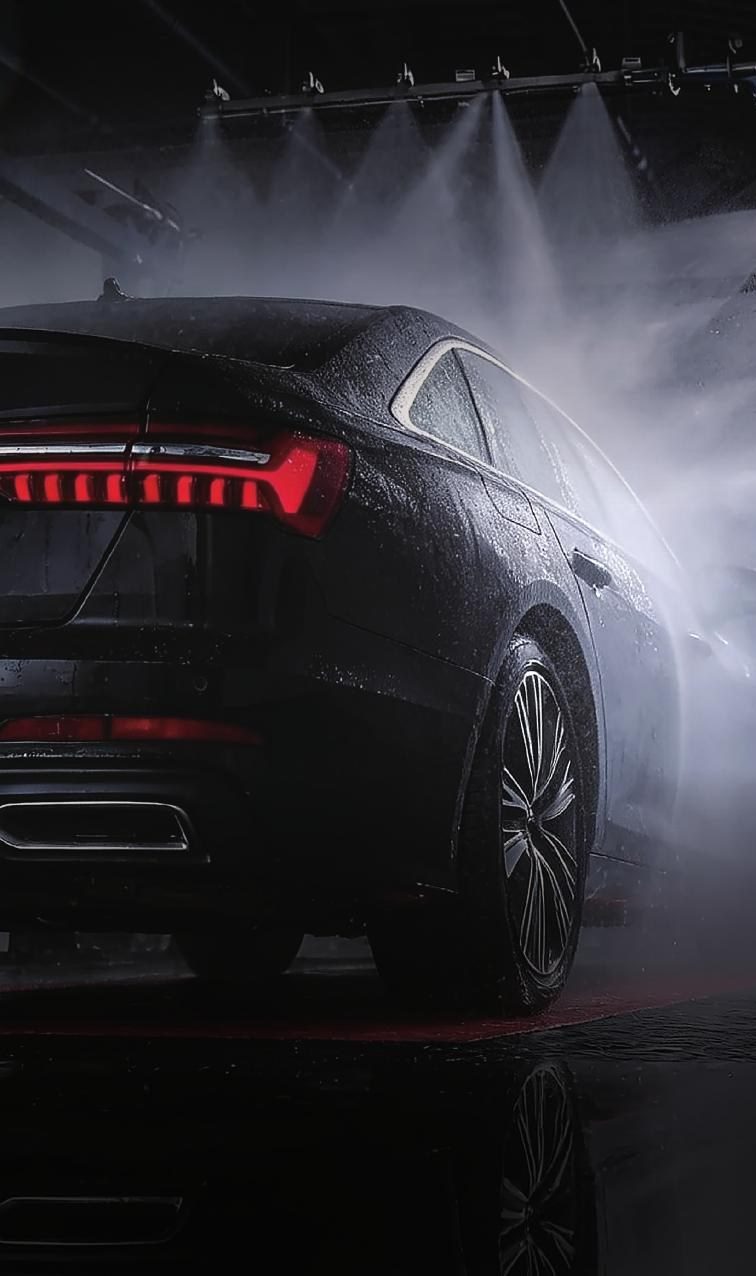
Nothing touches your paint.
A seven-stage automatic cycle that cleans with water pressure, foam chemistry and air — and never with a brush.
10 MPa
rinse pressure
140 L
water per car
1.2 kWh
energy per wash
Why touchless
Swirl marks come from the wash, not the road.
Every brush and cloth strip in a conventional tunnel picks up grit from the car before yours and carries it onto the next one. That is what puts fine circular scratches into clearcoat over a few years. Remove the contact and you remove the cause. Our cycle cleans entirely with pressure, chemistry and air, so a ceramic coating or paint protection film comes out exactly as it went in.
The bay
Two arms, no contact.
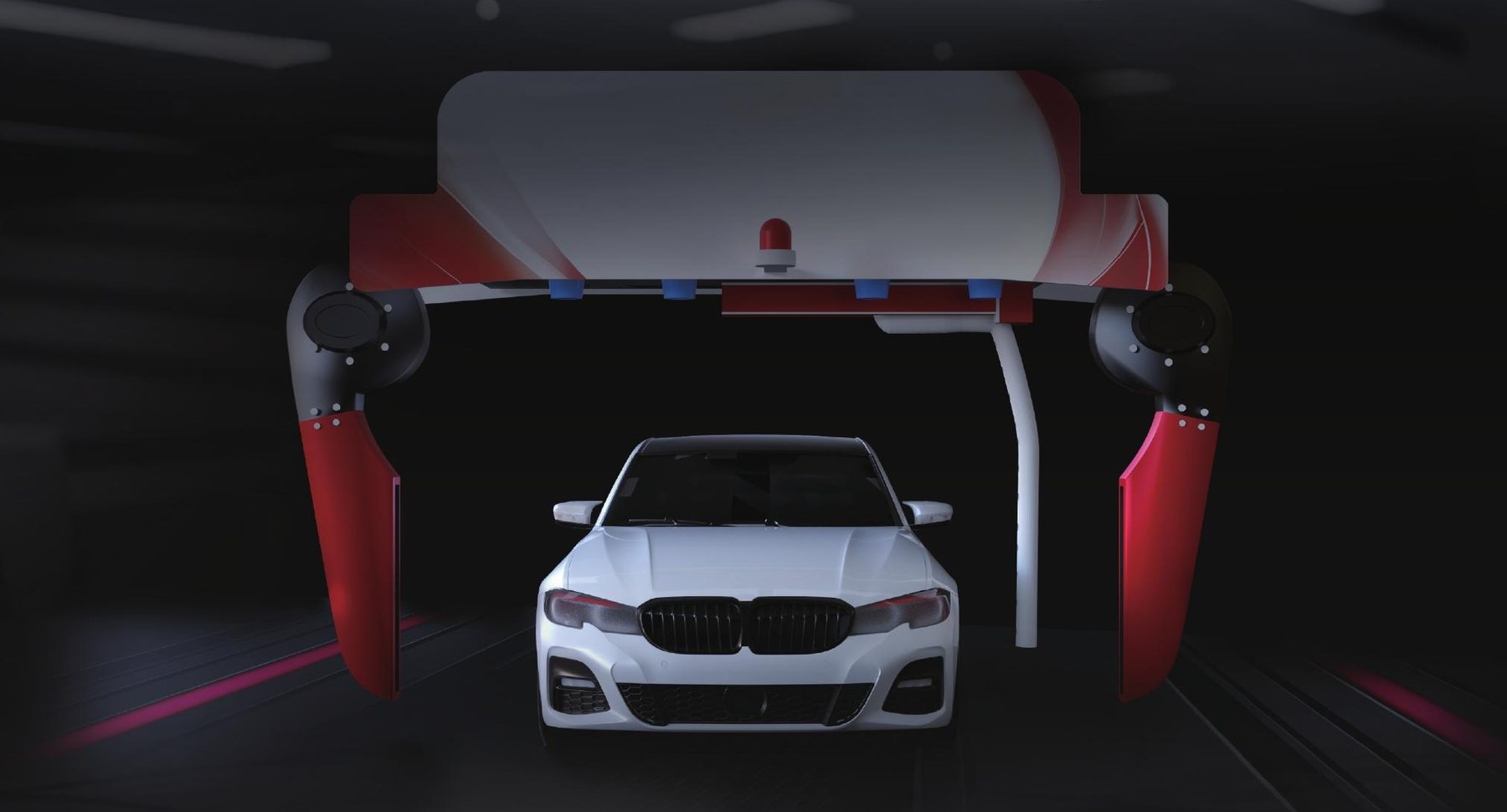
You drive in and stop. Nothing else moves you — the arms travel around the car while it stands still, tracing the profile the sensors mapped on entry. There is no conveyor to line your wheels up on, no rails to catch a low bumper, and no brushes anywhere in the bay. Stay in the car with the windows up and it takes a few minutes.
Drive in, stay put
No conveyor and no rollers. The car is stationary throughout.
Fits what you drive
Hatchbacks through to full-size SUVs, without a size selection to make.
Overhead dryers
Blowers built into the gantry, so drying happens in the same pass.
The cycle
Seven stages, start to finish.
The car is scanned on entry and the arm follows its actual profile — not a generic template — so coverage is the same on a hatchback as on a full-size SUV.
Chassis & hub
8 MPa jets clear the underbody, wheel arches and hubs first — the dirtiest part of the car and the part hand washes usually miss.
Pre-soak
A dwell chemistry that softens road film and insect residue so the later stages lift it instead of scrubbing at it.
Foam
Detergent is proportioned automatically and laid over the whole body. Profile scanning gets it into shielded areas — mirror housings, sills, the shut lines.
High-pressure rinse
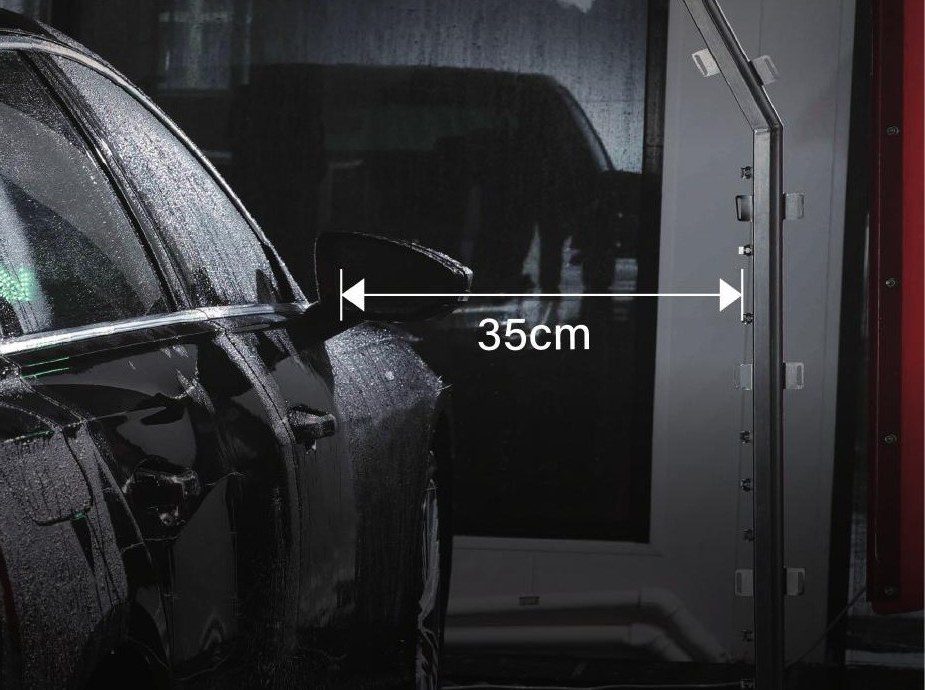
10 MPa across every panel. The rotary arm tracks the body and holds a constant 35 cm standoff, so pressure at the surface stays even from bonnet to boot.
Water wax
A protective layer that beads water off and shields the paint from acidic fallout between washes.
Soft water
An optional demineralised final rinse. No dissolved solids in the water means no spotting as it dries.
Air drying
Four 5.5 kW blowers push the water off the body. Nothing is wiped, so there is nothing to leave a mark.
Watch it work
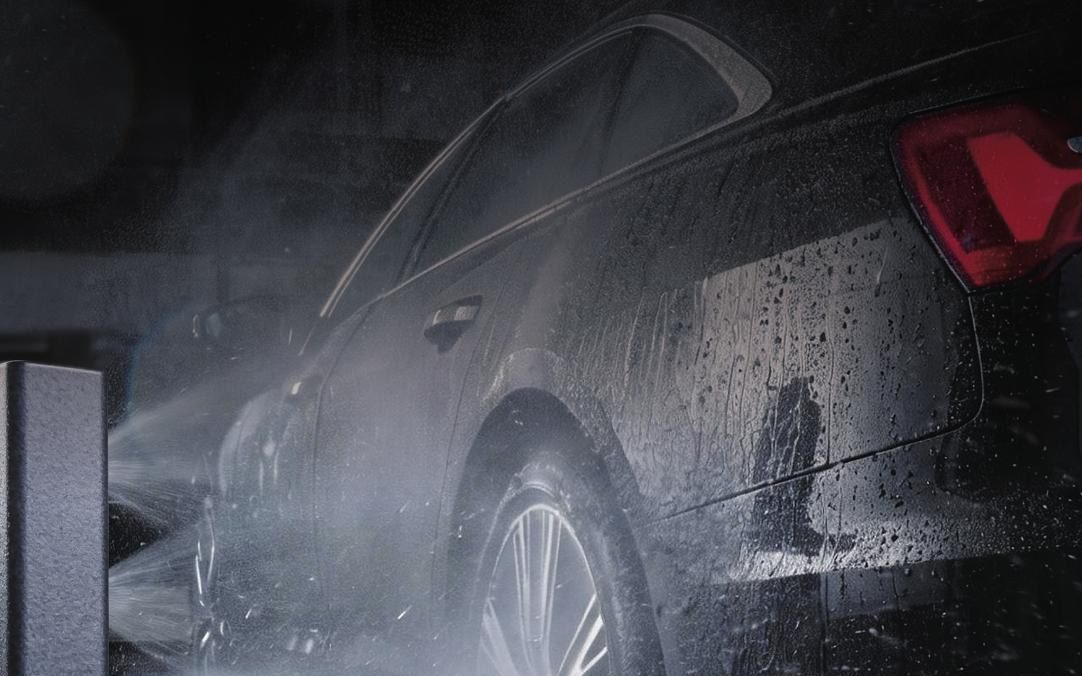
A full cycle, start to finish.
Vehicle tracking
It reads the car before it washes it.
Infrared and ultrasonic sensors build a three-dimensional profile on entry, and the arm works from that. Holding 35 cm from the body is what makes the pressure consistent — too far and the jet loses energy, too close and it is harsh on trim and badges. The system holds the distance through the whole pass, over mirrors, spoilers and roof rails.
Infrared + ultrasonic
Two sensing methods cross-checked, so a dark or wet body panel doesn't fool the scan.
Constant 35 cm standoff
Even pressure on every panel regardless of the car's shape or height.
Safe with accessories
Roof racks, aerials, spoilers and towbars are mapped rather than assumed.
Underneath
The part customers never see.
Reliability is what decides whether a wash is available when you turn up, so the plant behind it is specified harder than the wash itself.
Pump
15 kW
112 L/min flow, rated for 20,000 hours of operation
Dosing
Stainless
Sealed cabinet, automatic proportioning, no PVC in the wet path
Control gear
Schneider
Industrial sensors and switchgear throughout, not consumer parts
Frame
3 mm steel
Galvanised to 80 microns for 10–18 years of corrosion resistance
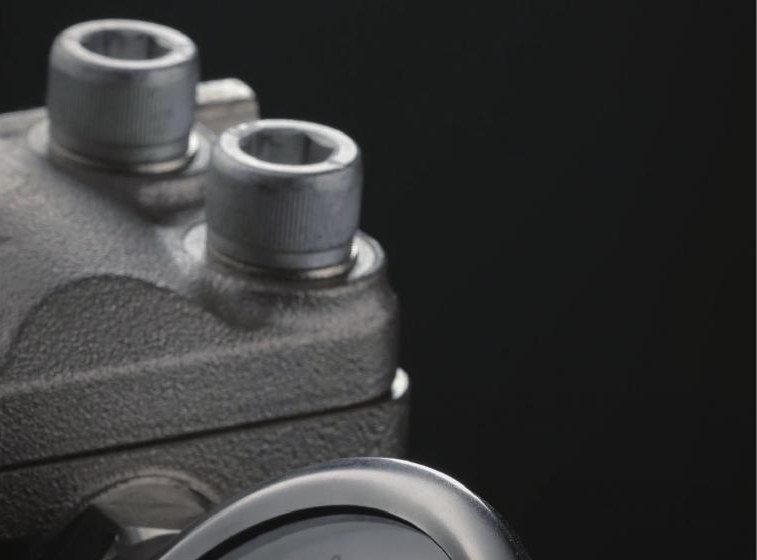
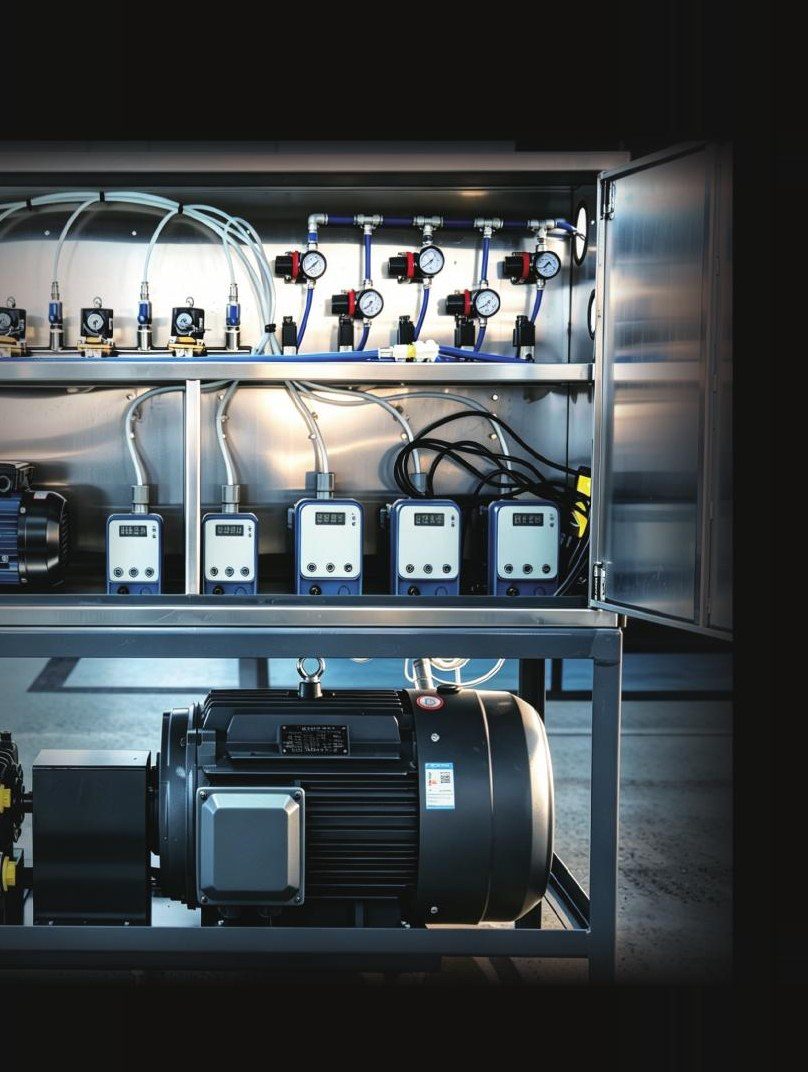
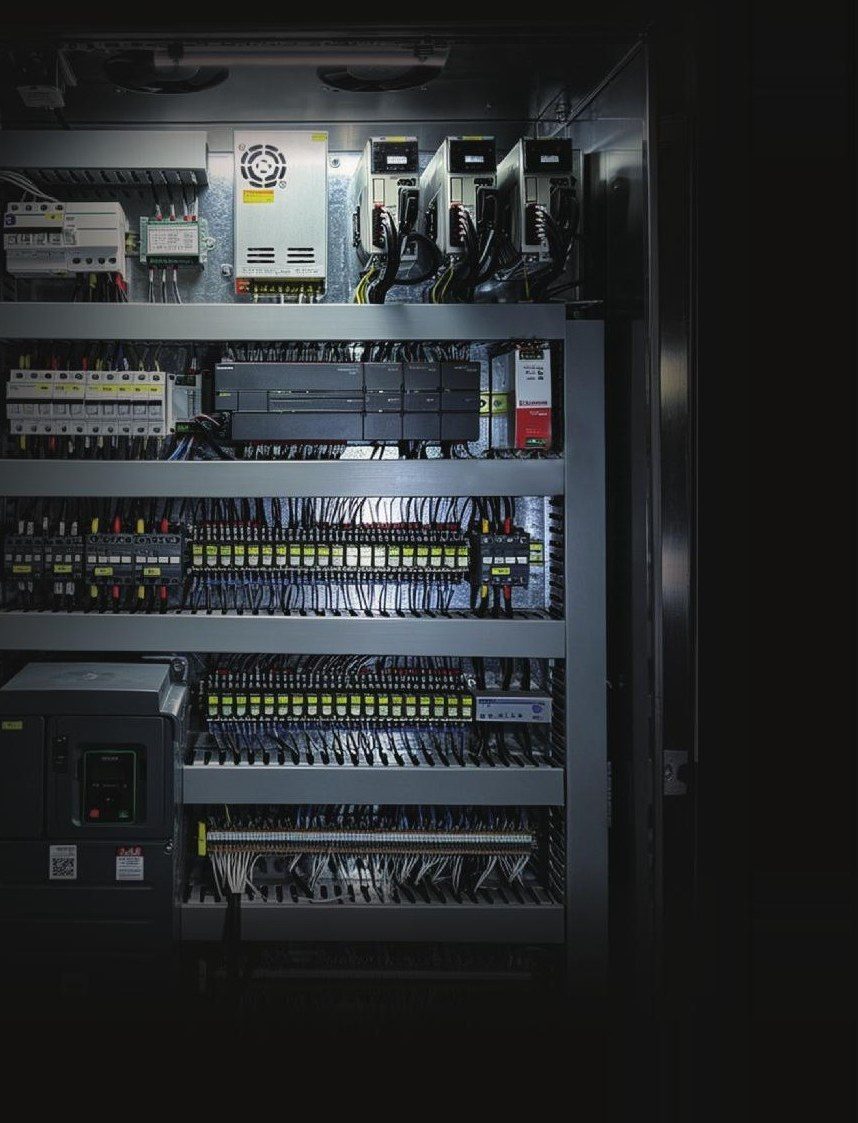
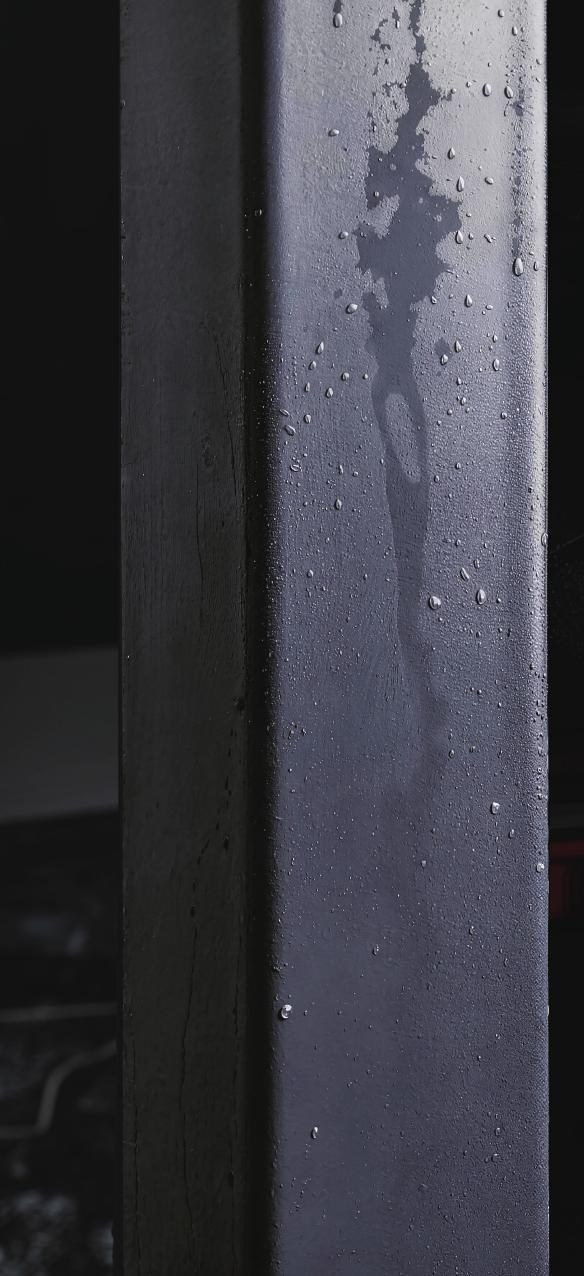
Water and electrical services are fully separated, with no exposed electrical components outside the control cabinet.
Self-service
Or do it yourself.
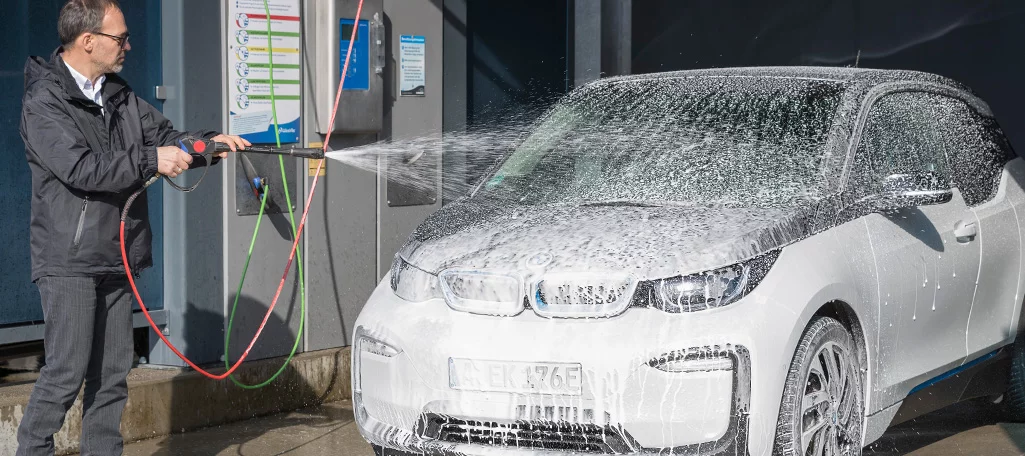
A covered bay with a timed lance, foam and rinse, for when you would rather take your time or only need to deal with the wheels and sills. Set the timer, pay for the minutes you use, and work at your own pace. Everything is in the bay — nothing to bring.
You set the timer
A 1–7 minute run, charged for the time you actually use.
Foam, rinse and lance
Provided in the bay — no equipment to carry or set up.
Covered and drained
Shaded bays with proper drainage, so you are not working in the sun or standing water.
One credit
A self-service run costs a single credit against two for a full automatic cycle.
On a membership
Both washes, one credit wallet.
Every TaKo membership gives you a monthly allowance of credits. Spend them whichever way the day calls for.
Self-service bay
1 credit
You choose a 1–7 minute timer
Automatic touchless
2 credits
Full seven-stage cycle
Unlimited wash.
One flat monthly price and no credits to keep track of. Wash as often as you like at any TaKo outlet, automatic or self-service. Launching soon — details and sign-up will appear here first.
Pricing shown is indicative and may change before launch.